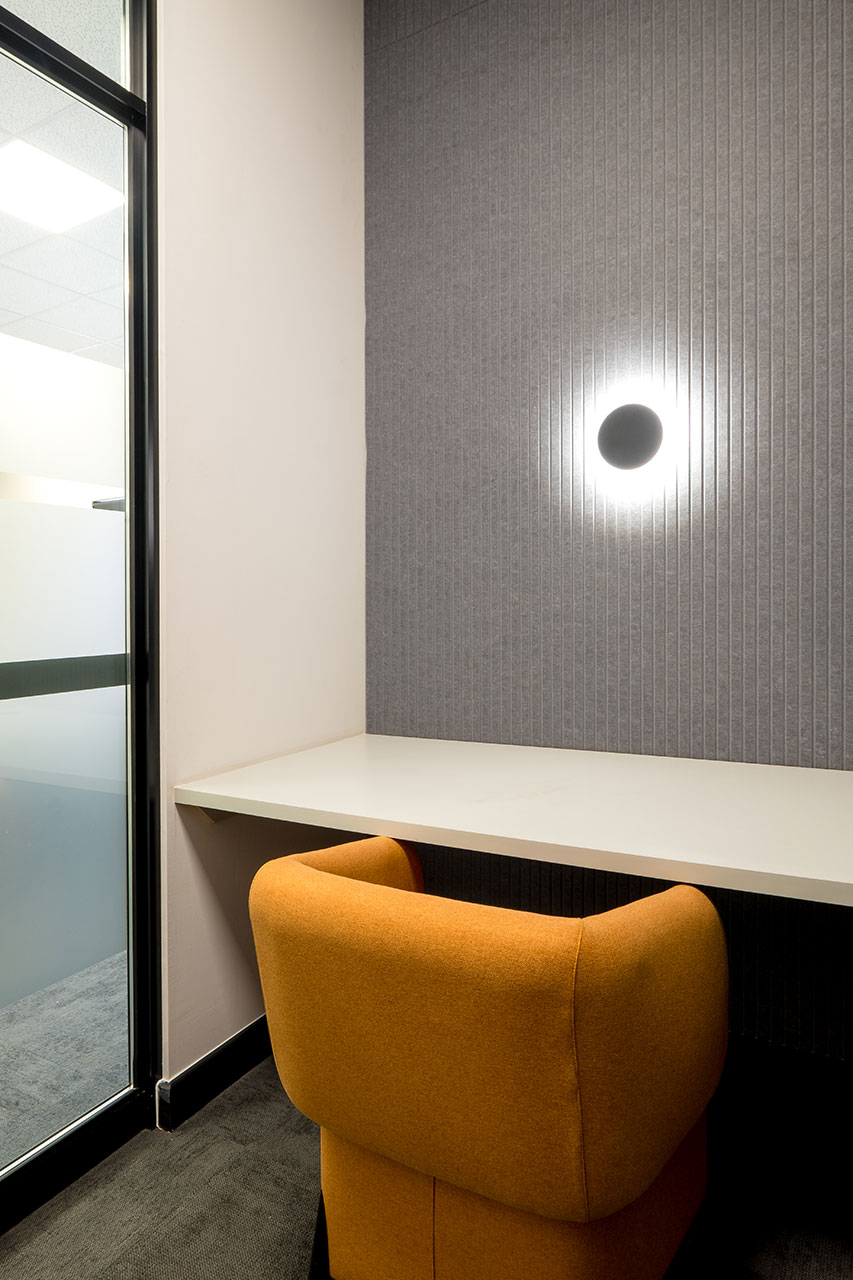
The Strategic Importance of Office Acoustics: Why Sound Management is the Core of Workspace Productivity
The Core Answer: Office acoustics refers to the management of sound within a workspace to minimise noise distractions and enhance speech privacy. In modern office design, strategic acoustic planning through FF&E (Furniture, Fixtures, and Equipment) is essential because it directly impacts employee cognitive function, reduces stress levels, and facilitates both “deep work” and effective collaboration. By utilising acoustic furniture, sound-absorbing panels, and smart sound-masking, businesses can reclaim “cognitive bandwidth” and improve overall bottom-line performance.
- FF&E (Furniture, Fixtures, and Equipment): A specialised branch of interior design procurement focusing on movable furniture and accessories that do not have a permanent connection to the structure of a building.
- Office Acoustics: The science of controlling sound within an office environment to improve comfort and productivity.
- NRC (Noise Reduction Coefficient): A scalar representation of how much sound an acoustic product can absorb (0.0 to 1.0).
How does poor office acoustics impact employee productivity and well-being?
Uncontrolled noise is the primary inhibitor of “flow” in the modern open-plan office. While transparency and collaboration are vital, the “vibrant hum” of an office—overlapping conversations, equipment clatter, and foot traffic—often transitions into a source of cognitive strain.
What is the link between noise and workplace stress?
Scientific research confirms that excessive background noise increases cortisol levels and impairs memory and concentration. When employees must filter out irrelevant sounds, they exhaust their mental energy on sensory management rather than their primary tasks. This results in mental fatigue, higher error rates, and a measurable decrease in creative problem-solving.
Why is there an "Acoustic Gap" in modern workspace design?
Despite noise control being a top priority for employees, many environments fall short as they fail to address it during the planning phase. This “Acoustic Gap” occurs when acoustics are treated as a retrofit “fix-it” rather than a foundational pillar of the FF&E strategy.
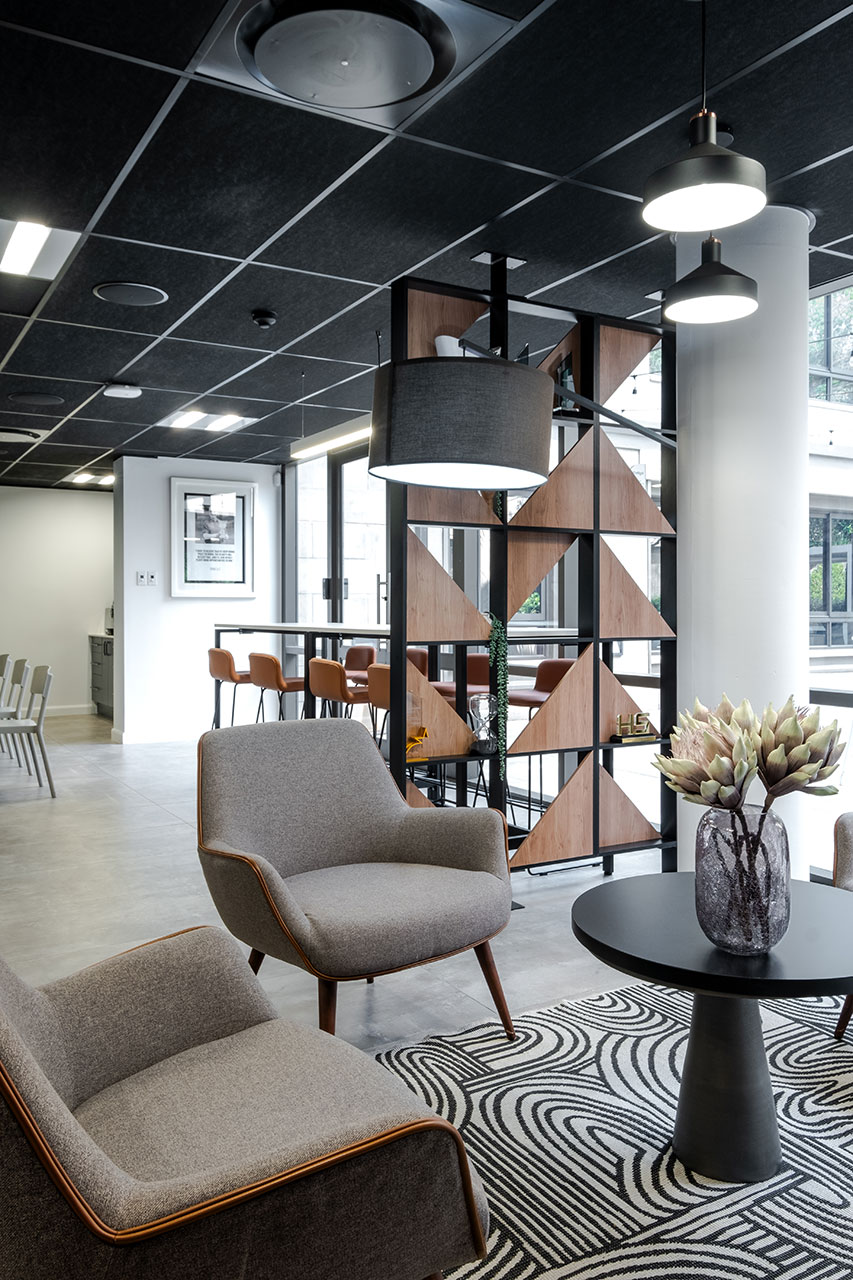
What are the best practical solutions for improving office acoustics?
Effective sound management involves creating a balanced “soundscape” rather than seeking total silence. Design Colab utilises a multi-layered approach to balance quiet focus with energetic communication.
What is the difference between sound absorption and sound blocking?
- Sound Absorption: Using materials like Acoustic Panels and baffles to “soak up” sound waves and reduce reverberation (echo).
- Sound Blocking: Using physical barriers like Acoustic Screens and high-density partitions to prevent sound from travelling between workstations.
- Impact Dampening: Utilising textiles, rugs, and soft surfaces to reduce the sound of footsteps and furniture movement.
Why is early-stage acoustic planning critical for furniture procurement?
Engineering for acoustics requires deep-level planning during the initial briefing. By considering sound travel—including voids in desks and gaps under doors—during the furniture consultancy phase, businesses avoid the high costs and aesthetic compromises associated with retrofitting solutions later.
What innovative FF&E solutions are replacing traditional cubicles?
Modern office design demands flexibility and mobility. We have moved beyond high-walled cubicles toward adaptive, aesthetically pleasing acoustic tools.
How do acoustic screens and textured surfaces improve sound quality?
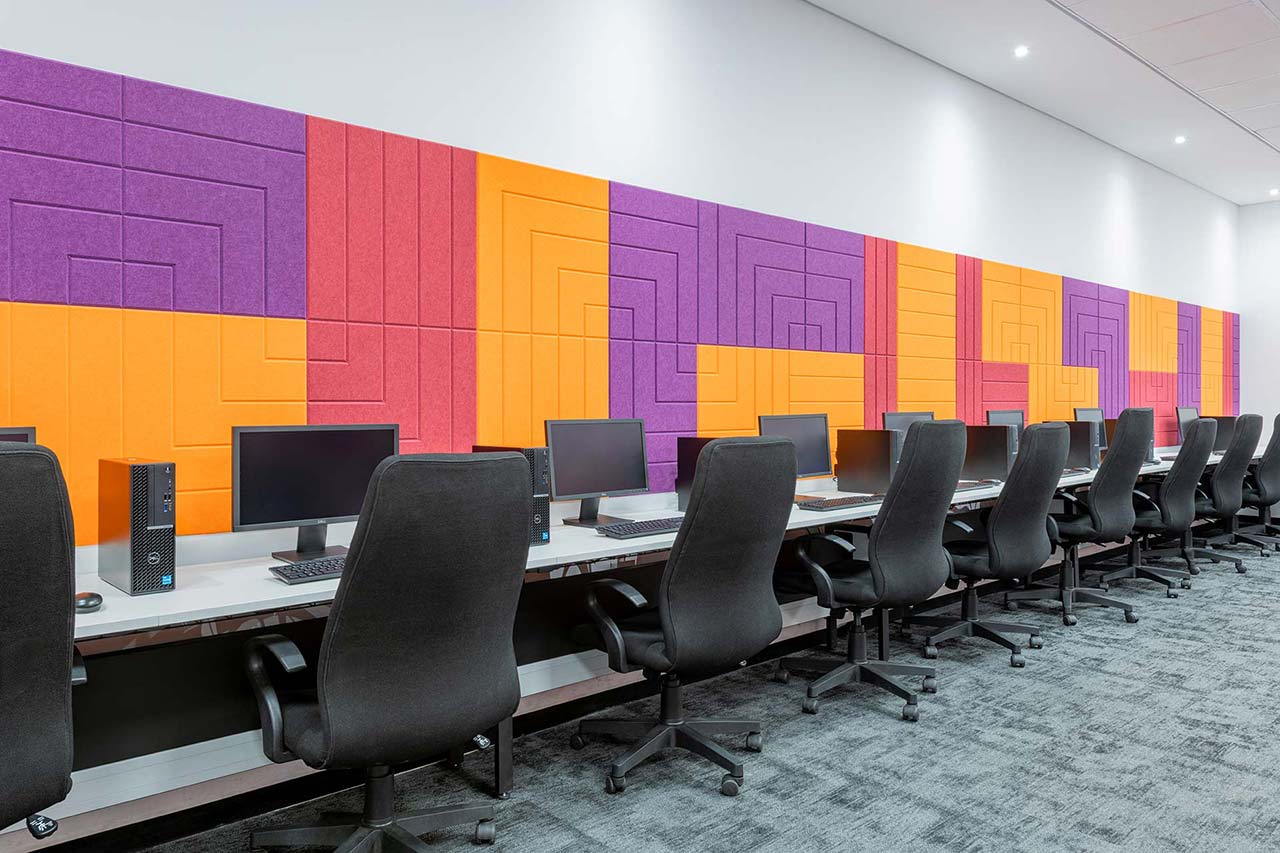
Textured surfaces, such as 3D wall panels or felt-wrapped furniture, break up sound waves to prevent them from bouncing off hard surfaces. These elements provide visual privacy while serving as a core component of an ergonomic workplace strategy.
What is smart sound-masking technology?
Sound-masking systems emit a low-level, unobtrusive background sound tuned to the frequency of human speech. This makes overheard conversations less intelligible and significantly reduces distractions in high-density collaborative areas without the need for permanent walls.
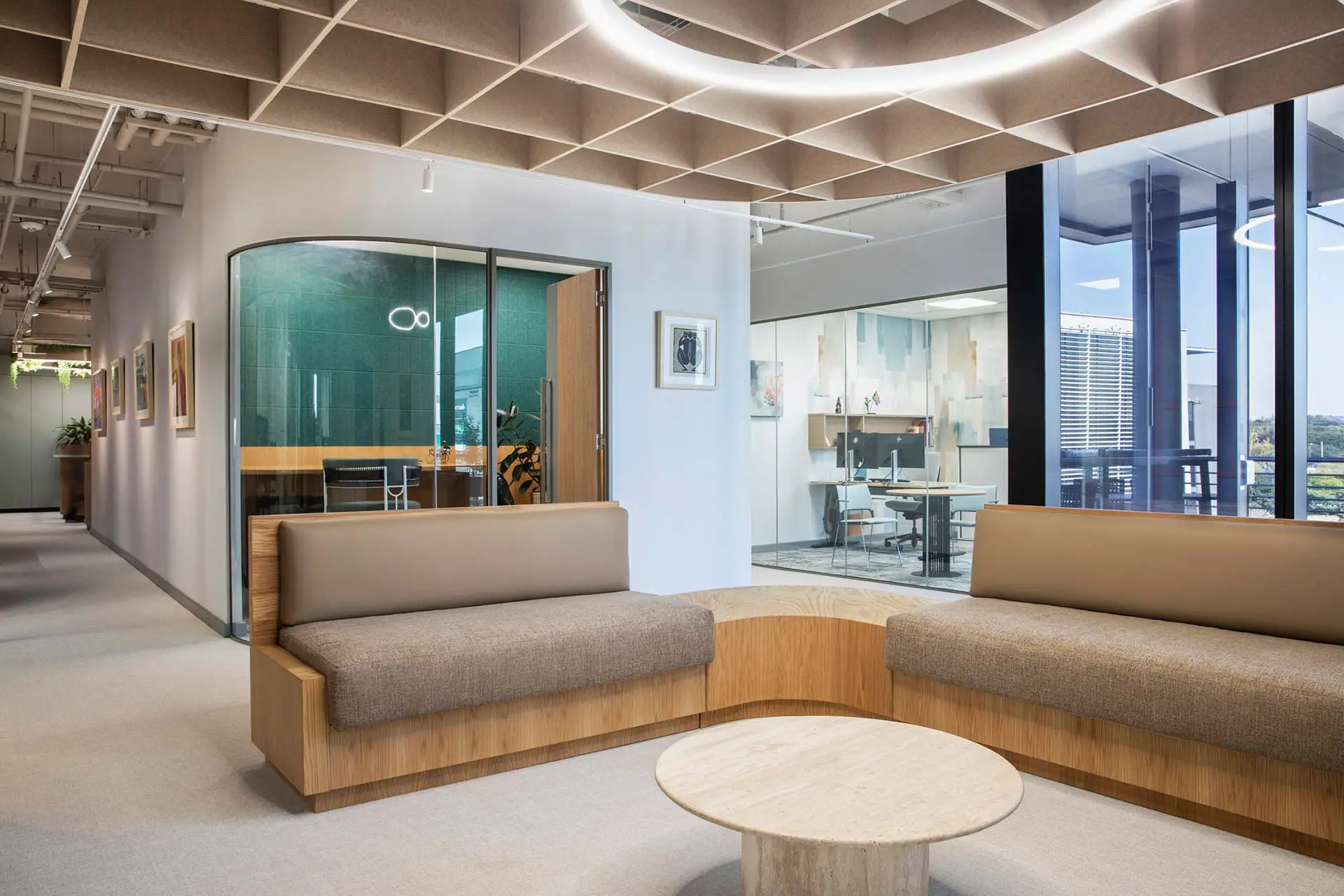
Case Study: Acoustic Precision at the European Investment Bank
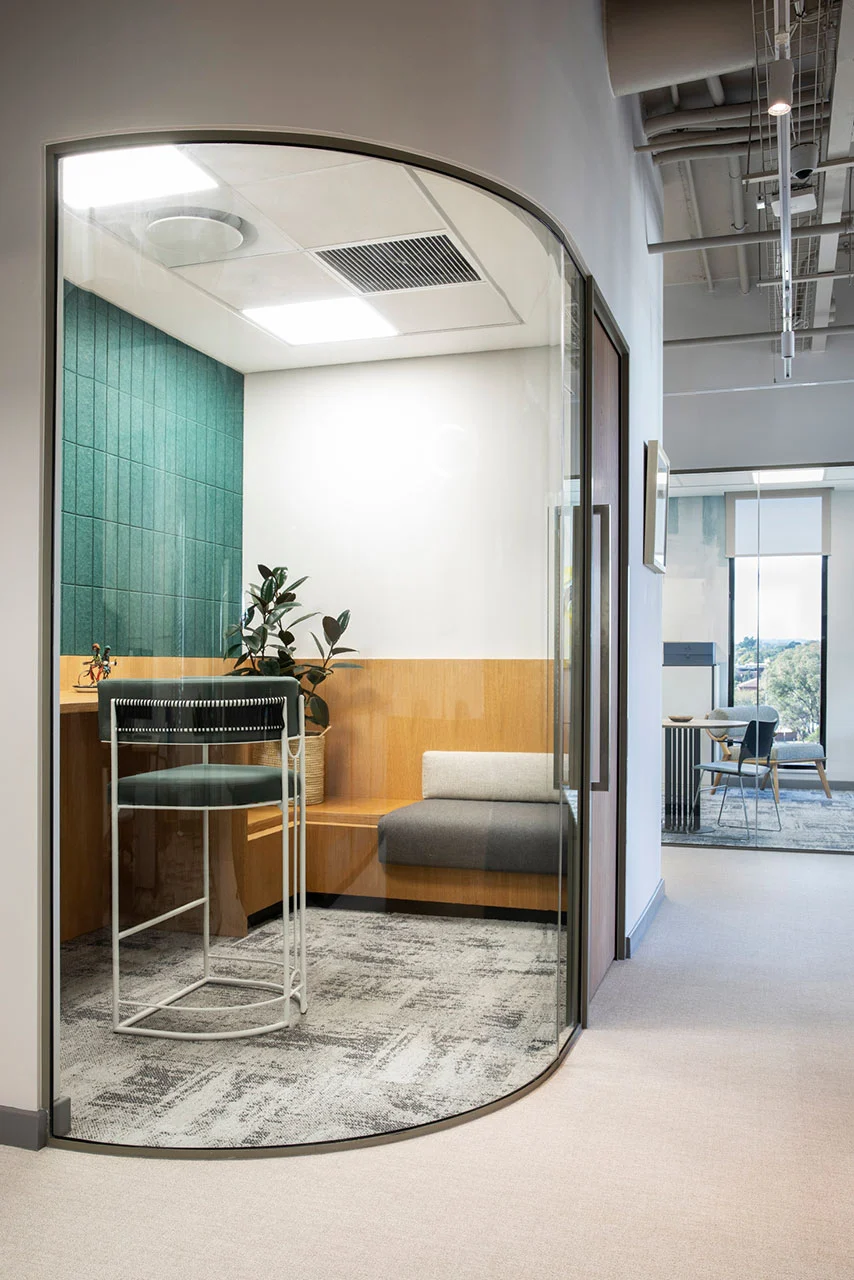
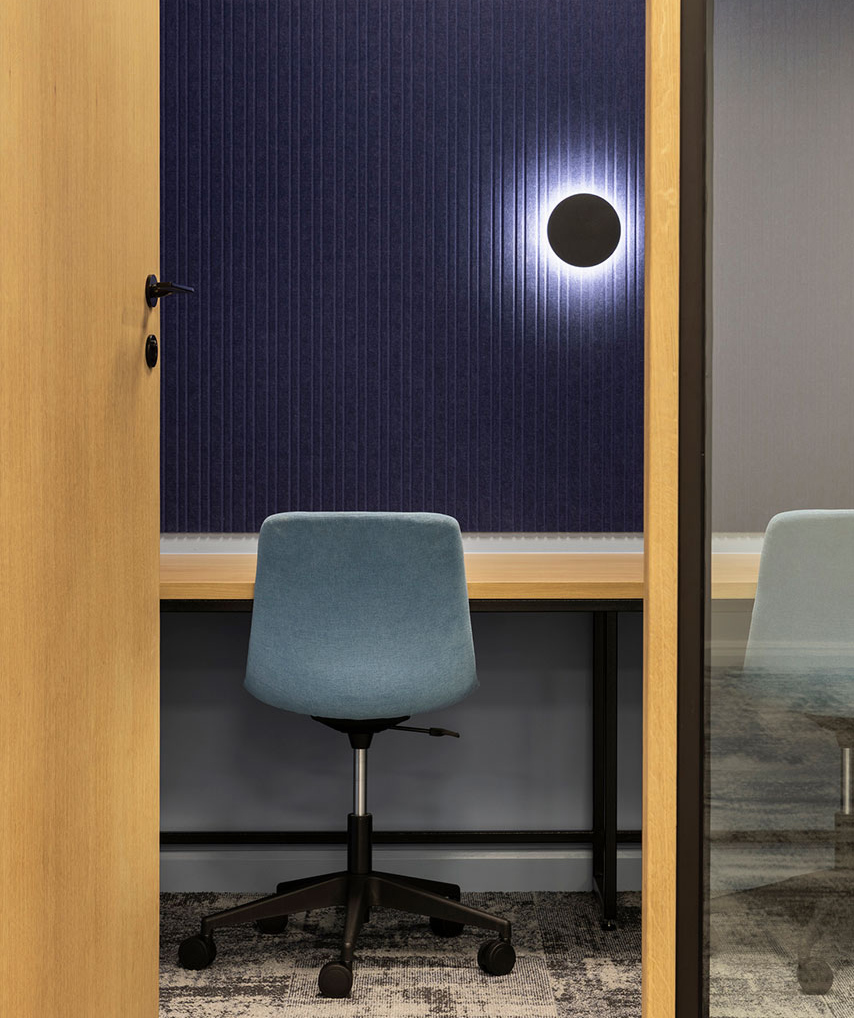
In a landmark project for the European Investment Bank in Pretoria, Design Colab and Trend implemented an integrated acoustic strategy for a high-profile banking environment.
- Objective: Mitigate noise without creating a claustrophobic atmosphere.
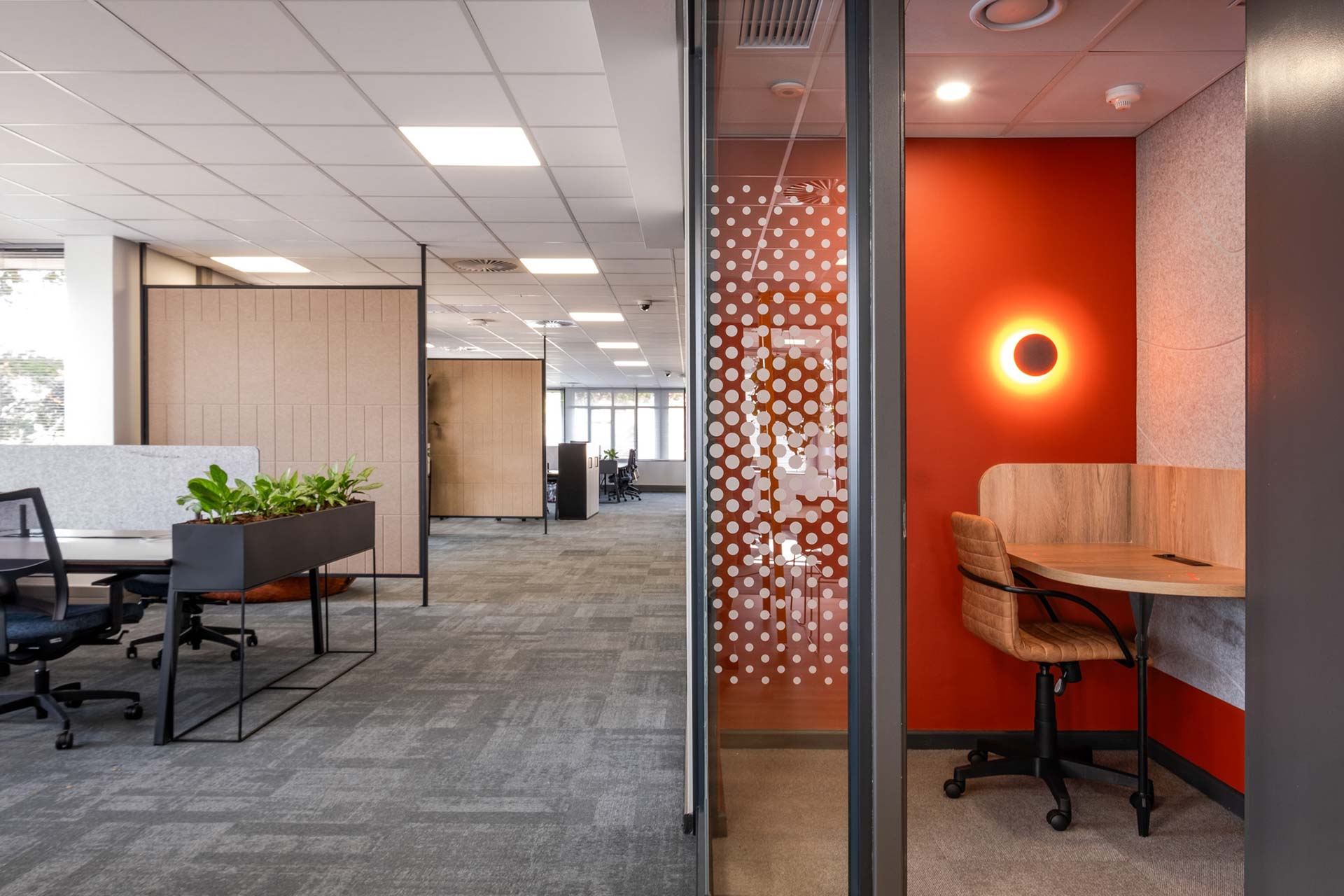
- Solution: Strategic placement of acoustic booth seating and high-performance sound-absorbing materials.
Result: A professional, high-performance workplace that balances confidentiality with open communication, reflecting the prestige of a global financial brand.
What are the psychological benefits of effective sound management?
A space that “sounds right” feels right. Investing in acoustics is an investment in human capital and employee retention.
Can acoustic furniture help with neurodiversity in the workplace?
Yes. For neurodivergent employees, background noise can be particularly overwhelming. Providing “quiet refuges” through acoustic furniture demonstrates a commitment to inclusivity and employee care, reducing anxiety and boosting morale.
How does biophilic design contribute to office acoustics?
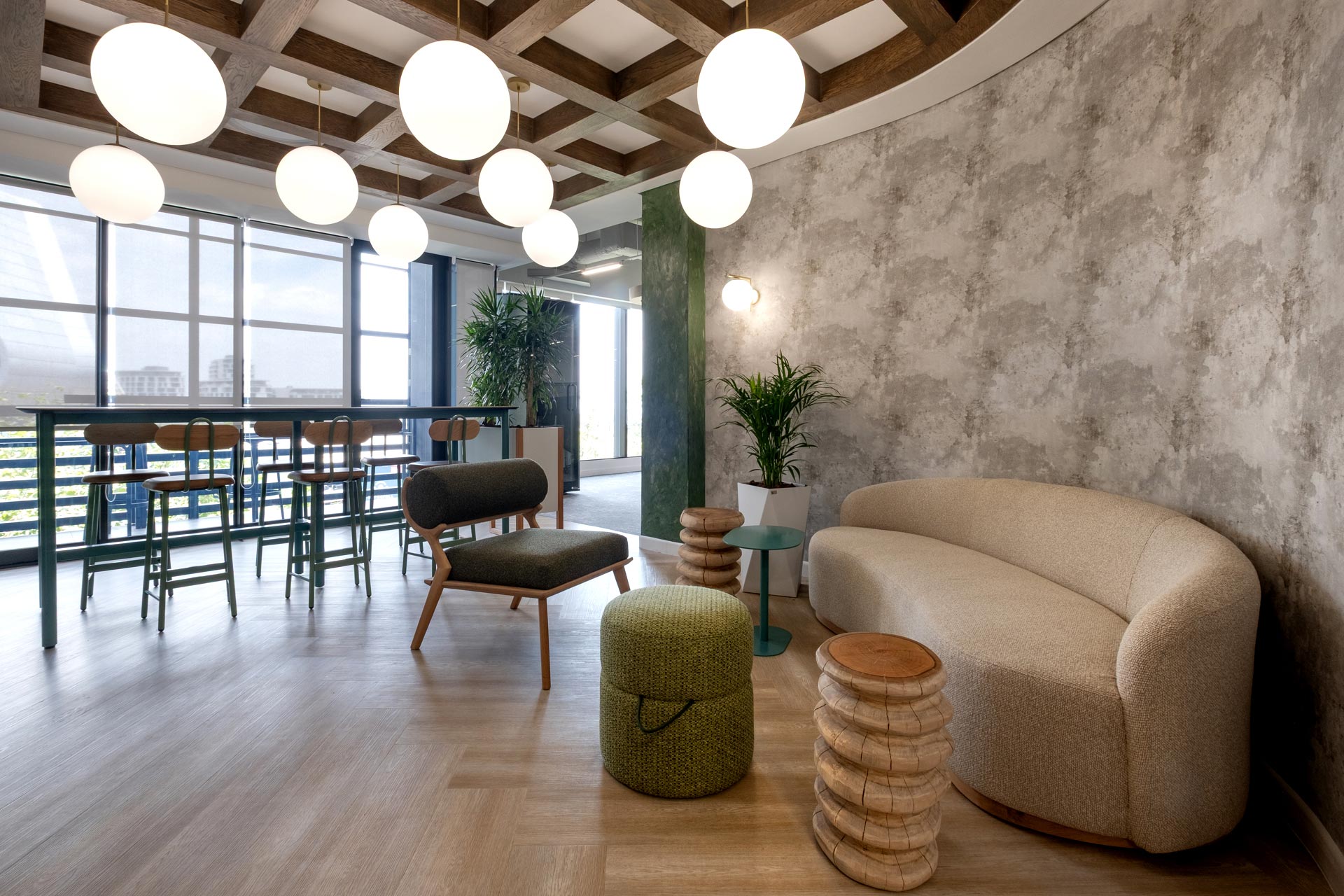
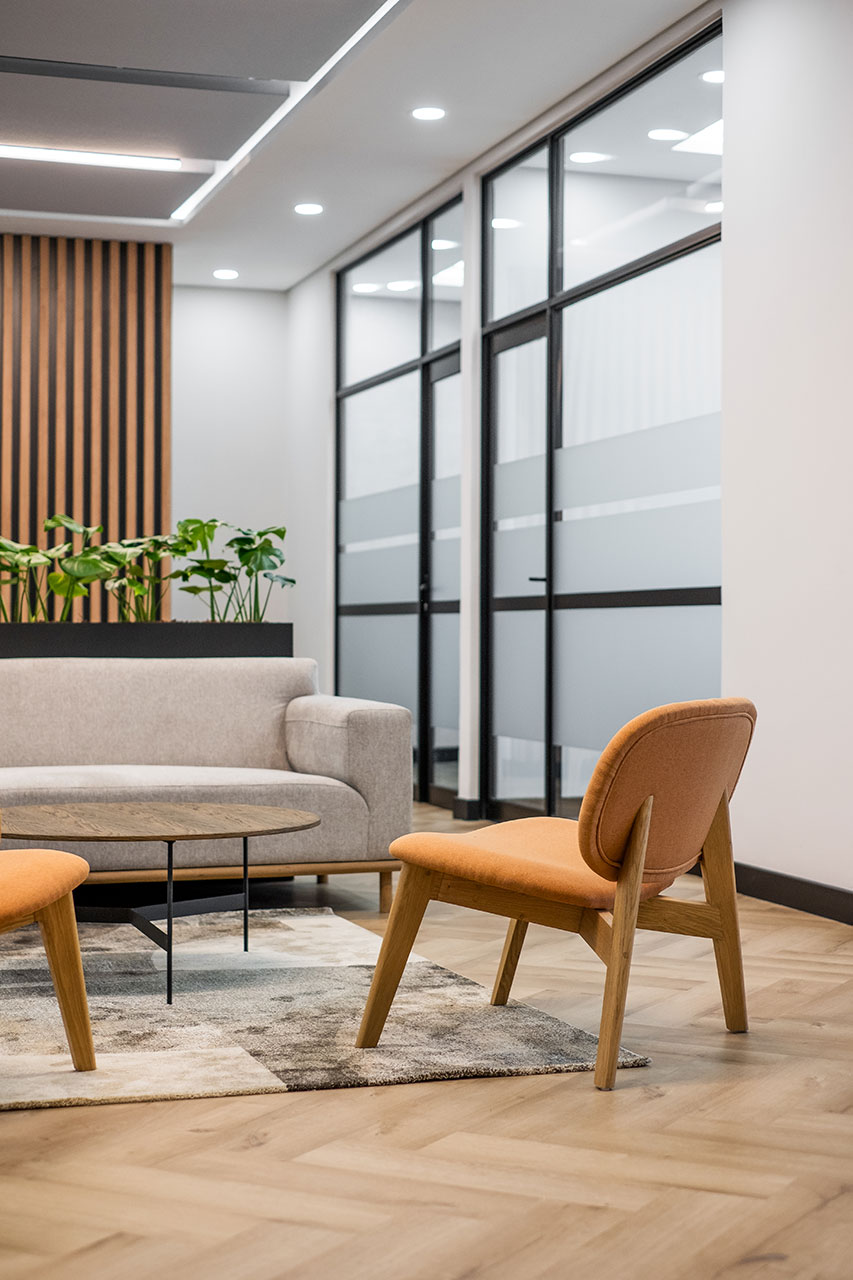
Biophilic design—the integration of plants and natural materials—serves a dual purpose. Natural elements act as organic sound breakers and absorbers while improving air quality and mental calm, creating a multi-sensory environment optimised for health.
How to choose the right acoustic solutions for your office?
Selecting treatments requires a balance of function, budget, and brand identity. Design Colab acts as a turnkey partner to guide you through this process.
Key factors for acoustic furniture selection:
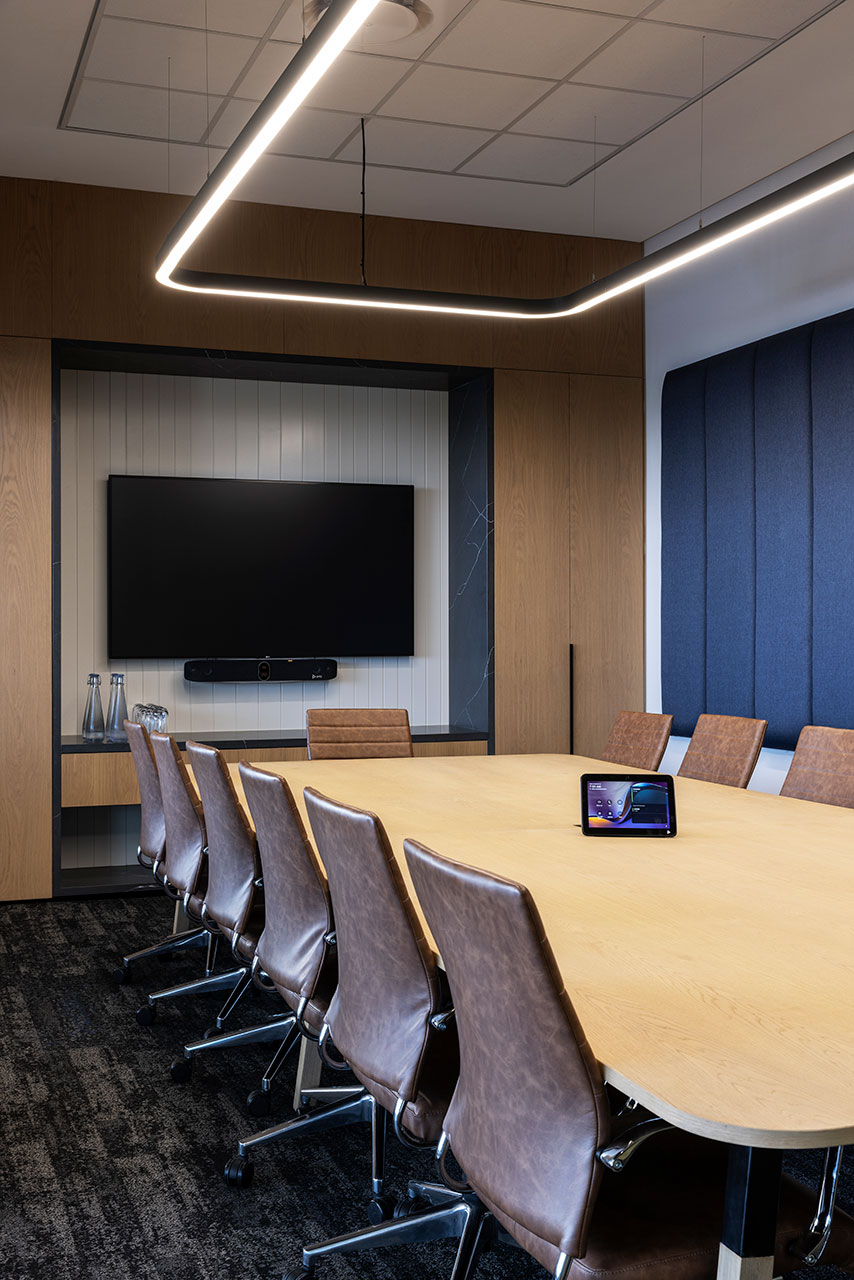
- Workspace Function: Does the area require total privacy (boardrooms) or distraction reduction (collaborative hubs)?
- Budgetary Constraints: Identifying cost-effective materials that do not compromise on NRC (Noise Reduction Coefficient) performance.
- Aesthetic Harmony: Customising finishes to match your brand culture and interior design language.
Future-Proofing Your Workspace with Design Colab
At Design Colab, we are more than furniture suppliers; we are partners in creating inspired, high-performance workplaces. Our “Colab” approach ensures that your unique business culture and operational needs are met through expert FF&E consultancy.
Ready to transform your space?
Contact Design Colab today to discuss your project requirements and find the perfect balance of quality, value, and acoustic comfort.